This question usually comes a little late in the conversation. is MBBS in Vietnam safe
Not at the beginning.
Not when fees are discussed.
And not even when university names come up.
It comes when everything else sounds almost convincing — and then a parent pauses.
Is Vietnam… A safe option?”
If you’re an Indian parent asking this, or a student thinking about living in another country for six years, that question is not fair. It’s a responsibility.
So instead of giving you a brochure answer, let’s talk about what safety actually looks like when someone goes to study MBBS in Vietnam.
What People Really Mean When They Ask About Safety
When families ask if MBBS in Vietnam is safe, they’re not talking about news headlines or crime statistics alone.
They’re thinking about smaller, everyday things:
- Will my child be okay walking to class?
- What happens if they fall sick?
- Will food suit them?
- If they feel stuck or confused, who will they turn to for help?
Safety, in real life, is about how predictable daily life feels. Let’s break that down.
Campus Life: Structured, Quiet, and Less Chaotic Than Expected
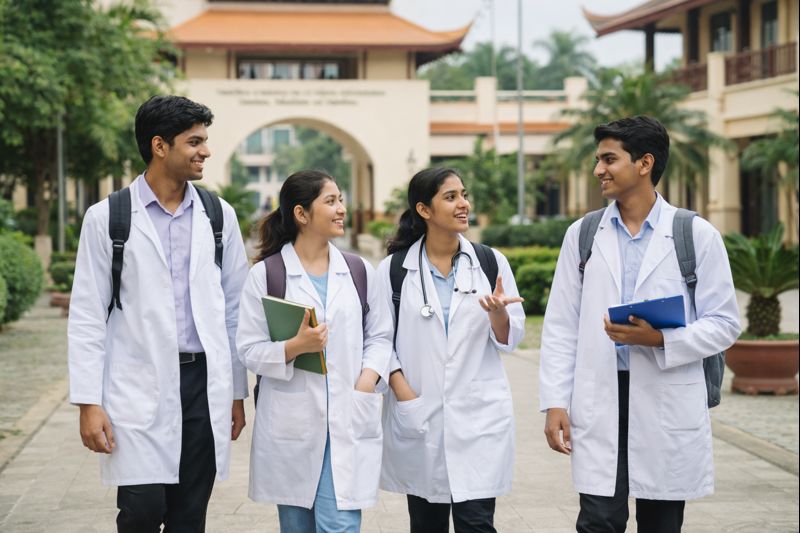
One thing that surprises most Indian students in their first few weeks is the calm atmosphere of medical campuses in Vietnam.
There isn’t constant noise. There isn’t unnecessary crowding. Classes start on time. Attendance is taken seriously. Hostels usually have rules — sometimes stricter than what students are used to back home.
At first, some students feel this is “too controlled”. But within a month, most fall into a rhythm. And that rhythm matters, especially in a demanding course like MBBS.
Campuses typically have security staff, controlled access, and clear systems. Not because the environment is unsafe — but because medical universities operate with discipline.
For parents, this structure often becomes the first quiet reassurance.
Life Outside the Campus: What Day-to-Day Safety Looks Like
Vietnam is not a country where students live in constant alert mode.
Indian students use public transport. They walk to nearby shops, meet friends, and explore the city on weekends. These are normal parts of life.
Is common sense required? Yes — like anywhere else.
But violent incidents involving students are rare, especially in areas around universities. Most issues students face are practical, not threatening:
- Understanding traffic flow
- Learning local apps
- Knowing which areas are better avoided late at night
These are adjustment challenges, not safety failures.
Over time, students gain confidence — and life becomes routine.
Food: The Fear Parents Carry More Than Students
Let’s address this directly.
Food is one of the biggest worries Indian parents have — and understandably so. Taste, hygiene, health… all of it matters.
Vietnamese food is different. It’s lighter, less oily, rice-based, and subtle in flavour. For the first few weeks, students miss home food. That’s normal.
What usually happens next:
- Students find Indian mess options near universities.
- Some hostels arrange Indian-style meals.
- Grocery stores stock basic Indian ingredients.
Many students end up eating a mix of Indian food when they crave it, and local food when convenience matters.
After a few months, parents often hear something unexpected:
“Ippo food okay-aa irukku.”
That’s when food stops being a worry.
Language: A Problem on Google, Not in Daily Life
Search engines make language sound like a bigger barrier than it really is.
Medical education for international students in Vietnam is conducted in English. Classes, exams, and textbooks — all are structured accordingly.
Outside academics, yes, Vietnamese is the local language. But students aren’t expected to master it. Basic words come naturally over time.
Hospitals that train international students are used to English communication. Day-to-day interactions — shops, transport, hostels — rely more on familiarity than fluency.
Language rarely affects safety. What it affects initially is confidence, and confidence improves quickly.
Local Support: The Difference Between Feeling Lost and Feeling Settled
This is one of the most important factors that families underestimate.
Indian students going for MBBS in Vietnam are not randomly placed. They usually arrive in groups, guided by authorized admission partners and university coordinators.
Support typically includes:
- Airport pickup
- Help with hostel arrangements.
- Assistance with local SIM cards and banking
- Guidance during initial registration
If a student feels unwell, confused, or overwhelmed, there are people to contact. That sense of not being alone changes everything.
This support system is a major reason why many parents relax after the first semester.
Healthcare Access for Students
Another quiet fear parents carry: “What if something happens medically?”
Vietnam’s healthcare infrastructure is solid, especially in cities with medical universities. Students have access to university clinics and nearby hospitals.
English-speaking doctors are available in major centres. Basic insurance coverage is usually part of the setup.
Serious medical emergencies are rare — but preparedness exists. That matters.
Cultural Comfort: Easier Than Expected
Vietnamese society is generally respectful and non-confrontational. Indian students do not face hostility or targeting.
Cultural differences exist, yes — but cultural friction is minimal. Over time, students build friend circles, celebrate festivals, and settle into a life that feels normal.
Homesickness happens. But it’s not isolation.
What Changes After the First Year
This is where reality speaks louder than reassurance.
By the end of the first year, students stop asking about safety. Parents stop calling weekly to check “everything okay?”
The conversation shifts to exams, clinical exposure, and plans.
That shift only happens when the environment allows students to feel secure.
So, Is MBBS in Vietnam Safe for Indian Students?
The honest answer is this:
Yes, MBBS in Vietnam is safe for Indian students — when the process is done properly.
Safety comes from:
- Choosing recognized universities
- Entering through legitimate channels
- Having structured campus life and local support
It’s not about the country alone. It’s about the ecosystem surrounding the student.
When that ecosystem is in place, Vietnam feels less intimidating than many people imagine.
A Final, Honest Thought
Most fears around studying abroad come from not knowing what daily life looks like.
Once families understand the routine — where students live, what they eat, how they study, and who supports them — fear reduces naturally.
The question stops being “Is MBBS in Vietnam safe?”
And becomes “Is this the right fit for us?”
That’s a much healthier question to ask.